Some early flaws in new concrete are normal and some are workmanship defects. This page separates the two and explains your options in California when a contractor does not respond.
Why is my new concrete already cracking? Is the contractor responsible for a crack that shows up weeks later?
New concrete shrinks as it dries, and thin cracks in the first weeks are common, more so after a hot or windy pour day. If the crack is narrow, level and inside or near a joint, it is usually normal. The contractor is responsible when the crack comes from the work: no joints or joints cut too late, a thin slab, a base that was not compacted, or too much water in the mix. Wide cracks, cracks with a step, and cracks that run across a slab with no joints are worth a written complaint.
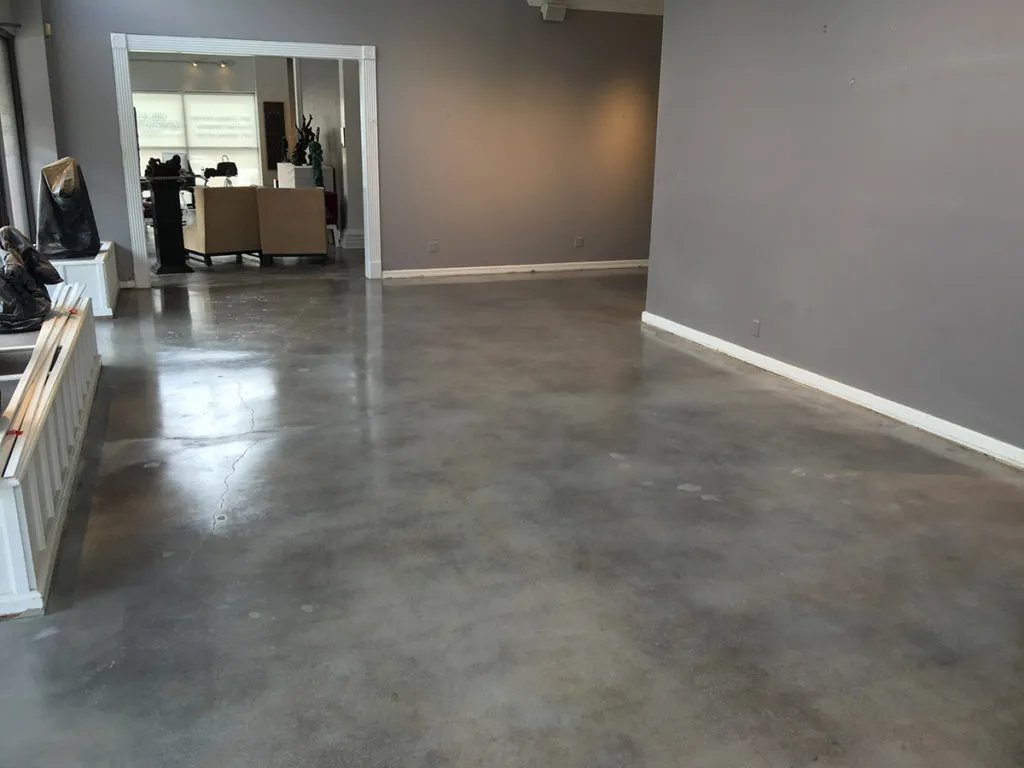
Why does my new concrete have dark and light patches?
Uneven drying is the usual reason. Shade, a damp spot in the base, two different truckloads or different finishing times all change the color. Much of it evens out over the first months as the slab dries. Patches caused by adding water to the surface or by a hardener put on unevenly tend to stay.
What happens if it rains on fresh concrete?
Rain in the first few hours can wash cement off the surface and leave it weak, sandy or pitted. Rain after the surface has set and been covered does little harm. If it rained on new concrete at your house, look for a dusty or soft top once it dries. Most of our rain falls from late fall to early spring, so pours in those months are planned around the forecast.
There are footprints, rough spots or a wavy finish with low spots. Is that acceptable?
No. Footprints, trowel marks and low spots that hold water are finishing faults. Small ones can be ground or filled. A surface that ponds across a wide area was placed or screeded badly. Photograph the puddles after rain or a hose test and send them to the contractor in writing.
Are control joints really necessary? My contractor says he will saw-cut them a week later.
Control joints are necessary. They are planned weak lines that make the slab crack where you cannot see it. Saw-cut joints must be made early, usually within about a day and sooner in hot weather. A week later is too late, because the slab has already picked its own crack lines by then. Ask for the joints to be tooled during finishing or cut the same day or the next morning.
My slab was poured without rebar or mesh and I only found out afterwards. What now?
Read your contract first. If it called for steel and none went in, that is a breach, and you should raise it in writing. If the contract was silent, a slab without reinforcement is not automatically a defect, but on Concord clay it is a weaker job, since steel is what holds cracks tight. You cannot add it later. Keep photos and watch the slab through one wet season.
My new stamped concrete is slippery. Why is it also going cloudy, fading or peeling?
It is slippery because a film-forming sealer on a smooth pattern has little grip when wet. A coat of sealer with a grit additive fixes that. A cloudy or white look is moisture caught under the sealer, often from sealing too soon or too thickly. Peeling means the sealer never bonded. Fading comes from strong sun on the sealer and surface color. A solvent wash can clear clouding, and cleaning and resealing restores color.
The surface started flaking within the first year. What went wrong?
Flaking in the first year points to a weak surface layer. Further north that happens in the first winter of freezing and deicer. In Concord, where hard freezes are rare, the likely causes are water worked into the top during finishing, or a surface that dried too fast. It is a workmanship matter and worth raising with the contractor.
The concrete was poured in extreme heat and now it looks bad. Is that the cause?
It may well be. Concrete poured in high heat sets fast. The crew has less time to finish, the surface loses water quickly and fine cracks spread across it like a map. Good practice on a hot Concord day is to start at dawn, dampen the base, use a mix adjusted for the weather and begin curing at once. Ask what was done on your pour.
The stamped pattern is crooked or uneven and I still owe the final payment. Should I pay?
Hold back a fair amount and say why in writing. California law says progress payments may not exceed the value of the work done. Send photos, list what is wrong and ask for a repair plan with a date. Do not withhold the whole final balance over a small flaw, and do not pay in full for work that clearly misses what the contract describes.
The crew left ruts in the lawn, washout and splatter. Who cleans it up?
The contractor. Tire ruts, concrete rinse water dumped in the yard or the gutter and splatter on walls, fences or cars are part of the job to put right. Washout must not go into the street drain, because storm drains in Contra Costa County run to creeks and the bay. Report it in writing with photos before the final payment.
My new pad is out of level. Can it be fixed?
First check what was intended. Outdoor slabs are meant to slope a little so water drains. If the pad is out of level compared with the plan, for example a shed or spa pad that had to be flat, grinding or a bonded topping can correct small errors. Large errors mean taking out and repouring.
The forms were left on and now they are stuck. Is that a problem?
Mostly it is a nuisance. Forms are normally stripped within a day or a few days. Wood left against the slab holds moisture, can stain the edge and draws termites, which matter in this area. Ask the contractor to come back and remove them. If you pry them off yourself, work gently so the edge does not chip.
What can I do if the contractor will not come back to fix it?
Put the problem in writing with photos and a deadline. If that fails, California gives you these routes.
- File a complaint with the Contractors State License Board at cslb.ca.gov or 800-321-CSLB (2752). The board accepts complaints for up to four years from the act.
- The board offers arbitration, which is mandatory for disputes of $25,000 or less.
- Small claims court hears lower-value disputes without lawyers.
- If the contractor has no licence, report that to the board as well.
The real number for your job comes from a free visit, where we measure and look at the ground. Call (925) 690-1468 or text a photo of the area.